Your Outdoor Cleaning Resource Hub
Explore expert tips, guides, and insights from Newark Drive Cleaners that help you maintain cleaner, healthier outdoor spaces. My resource hub offers practical advice, seasonal care ideas, and solutions for every surface around your home.
 10 March, 2026
Professional Exterior Cleaning: Essential Things You Need to Know!
Most properties benefit from a professional clean once a year, though homes near heavy tree cover or busy roads may require a refresh every 6–8 months.
Look for dark oil or tire stains, a generally dull or grey appearance, and slippery green patches of moss or algae that make walking unsafe.
Yes, because removing moss and algae prevents them from trapping moisture that can eventually weaken and damage paving stones or concrete.
 05 March, 2026
Why DIY Oil Stain Removal Methods Often Make It Worse: How Experts Help!
Most household cleaners push oil deeper into porous surfaces instead of extracting it.
Improper pressure can etch concrete, damage jointing sand, or spread oil further.
Professional degreasers are stronger and specially designed for outdoor surfaces like block paving, concrete, and tarmac. Unlike retail cleaners that only break down oil on the surface, professional products draw oil out from deep within the material’s pores.
 25 February, 2026
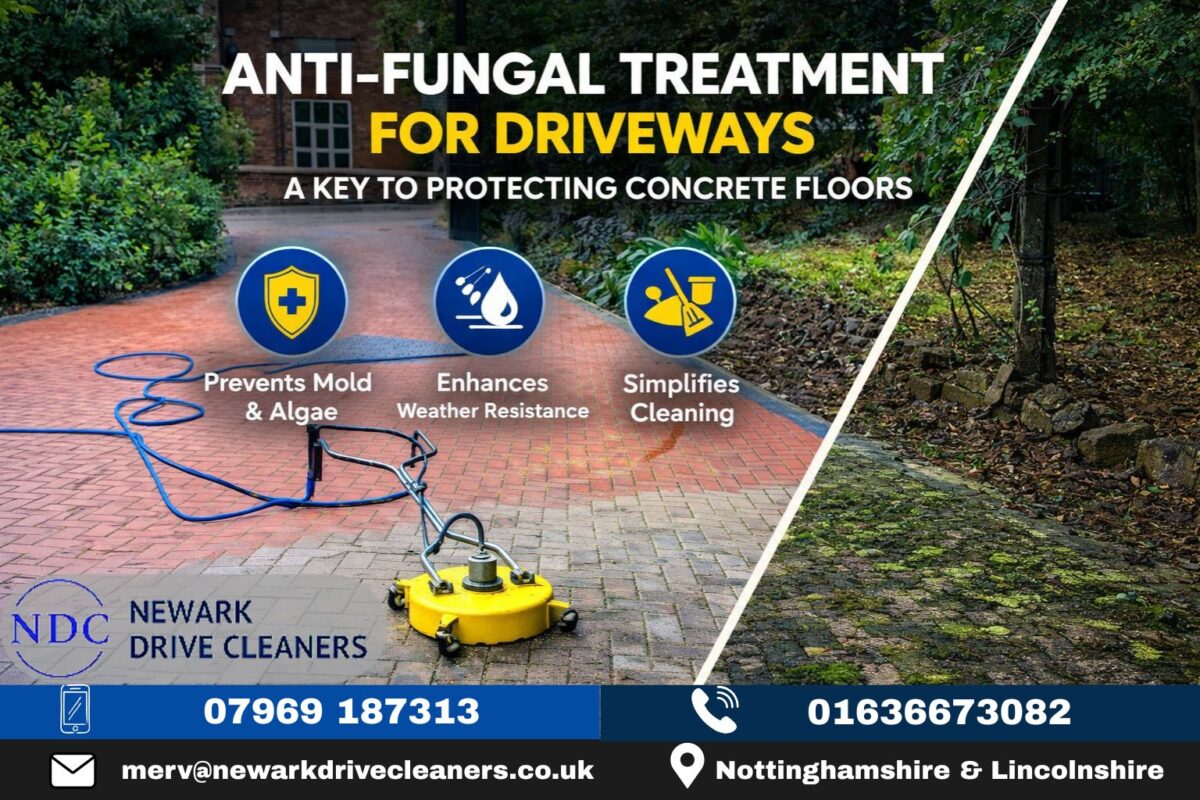
Anti-Fungal Treatment for Driveways: A Key to Protecting Concrete Floors
It removes and prevents algae, fungi, and moss growth on concrete, block paving, and stone surfaces. The treatment kills spores at the root, improves appearance, reduces slipperiness, and helps maintain surface durability.
By stopping organic growth from penetrating concrete, the treatment prevents cracks, stains, and weakening. This preserves structural integrity, reduces repair needs, and ensures the driveway remains strong and functional over time.
Yes, it creates a smoother, resistant surface that limits microbial buildup. Dirt and debris become easier to remove, reducing the need for frequent pressure washing and helping preserve the driveway’s condition.