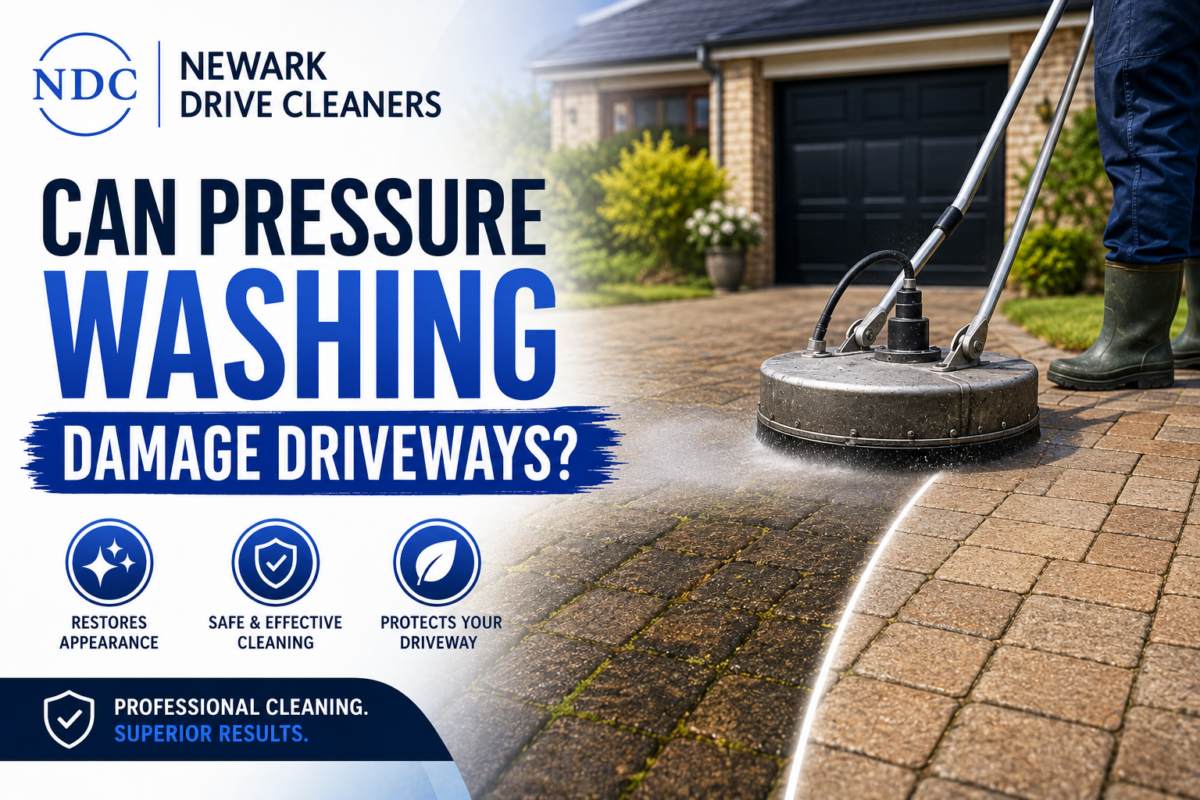
Can Pressure Washing Damage Driveways? What Homeowners Need to Know
Highlights:
-
Professional pressure washing safely removes dirt, moss, algae, oil stains, and tyre marks, restoring driveways’ appearance effectively.
-
Incorrect pressure washing can damage block paving, concrete, tarmac, and natural stone driveways through surface erosion.
-
Professional cleaners adjust pressure, water flow, and techniques according to driveway material to prevent costly damage.
-
Expert driveway cleaning delivers deeper, longer-lasting results than DIY methods while maintaining surface integrity and appearance.
📞 Call 07969 187313 OR📞 Call 01636 673082
A clean driveway can dramatically improve the appearance of a property. Over time, driveways naturally accumulate dirt, moss, algae, oil stains and tyre marks. Pressure washing is widely regarded as one of the most effective ways to restore the hard surfaces of driveways. Many homeowners ask: Can Pressure Washing Damage Driveways? Well, the simple answer is that it can if it is carried out incorrectly.
Hello! I am Mervyn Noble, a professional driveway cleaner in Nottinghamshire, Lincolnshire, and the surrounding areas. I believe, when performed by experienced professionals using the correct methods, pressure washing is one of the safest and most effective ways to clean and maintain a driveway. In this blog, I will explore types of driveways prone to damage and how professional driveway cleaning makes a difference.
Why Pressure Washing Matters for Driveway Cleaning
Pressure washing technique for driveway cleaning uses high-pressure water to remove contaminants from exterior surfaces. This process can eliminate years of biological growth and built-up dirt that non-professionals simply cannot match. The magic of pressure washing typically lies in its ability to concentrate water into a powerful jet.
Accumulated dirt, weeds, moss, and algae between joints are the common problems that require pressure washing. As a professional, I generally take ordinary water from your garden tap and pump it out at a high speed through a narrow nozzle. This forceful stream can dislodge even the most stubborn dirt, restoring a clean and well-maintained look.
Driveway Types Are Most Vulnerable to Damage
Block Paving
Block paving remains one of the most popular driveway choices throughout the UK. This surface is generally robust, and incorrect pressure washing can create several problems, including removal of jointing sand, surface erosion, weed regrowth and uneven appearance. DIYers use excessive pressure, and that is why the removal of kiln-dried sand is particularly common.
Concrete Driveways
Older concrete driveways may have weakened surface layers that can be damaged by aggressive pressure washing. Potential risks associated with this surface include surface pitting, aggregate exposure, flaking, etching, and surface weakening. As a professional with a reliable outdoor surface cleaning company, I use careful pressure adjustment when cleaning concrete surfaces.
Tarmac Driveways
Tramac requires proper caution as it has a softer composition. It can be damaged relatively easily. Problems regarding improper pressure washing include surface displacement, scarring, pitting, and weakening. I generally use lower pressure settings when cleaning a tarmac driveway.
Natural Stone Driveways
Natural stones can vary significantly in strength and composition. Softer stones, including limestone and sandstone, require careful cleaning to prevent surface erosion. My service enhances the natural appearance of the stone and prevents further deterioration from organic growth.
How Professionals Over DIY Make a Difference
One of the most common mistakes homeowners make is assuming that more pressure equals better cleaning. But professional driveway cleaning often relies more on technique than raw power. Based on my experience as a professional, I deeply understand surface composition, pressure adjustment, rates of water flow and cleaning angles.
While DIY equipment may remove some surface dirt, professional cleaning delivers deeper and longer-lasting results with zero damage. These considerations allow surfaces to be cleaned thoroughly while minimising risk. For expert results and reliable service, contact me to discuss your driveway cleaning needs.
Popular Posts
July 20, 2026
Leave a Reply